

Your mouth contains billions of bacteria, and while some are helpful and aid various processes, like digestion, others can harm your smile. Unfortunately, certain germs in your mouth produce acids that wear away the protective outer layer of your teeth, triggering potentially painful disease and decay.
But if you’re unsure what to look for, you might not recognize that you’ve developed a problem. Continue reading to learn more about the anatomy of your teeth so you can identify areas of concern and seek treatment to prevent them from progressing!
What Are Teeth Made From?
Many people assume that teeth and bones are essentially the same because both are made of incredibly hard, white materials. But the truth is that your teeth are structurally different because they don’t contain blood cells for self-regeneration, and are made of a denser concentration of minerals.
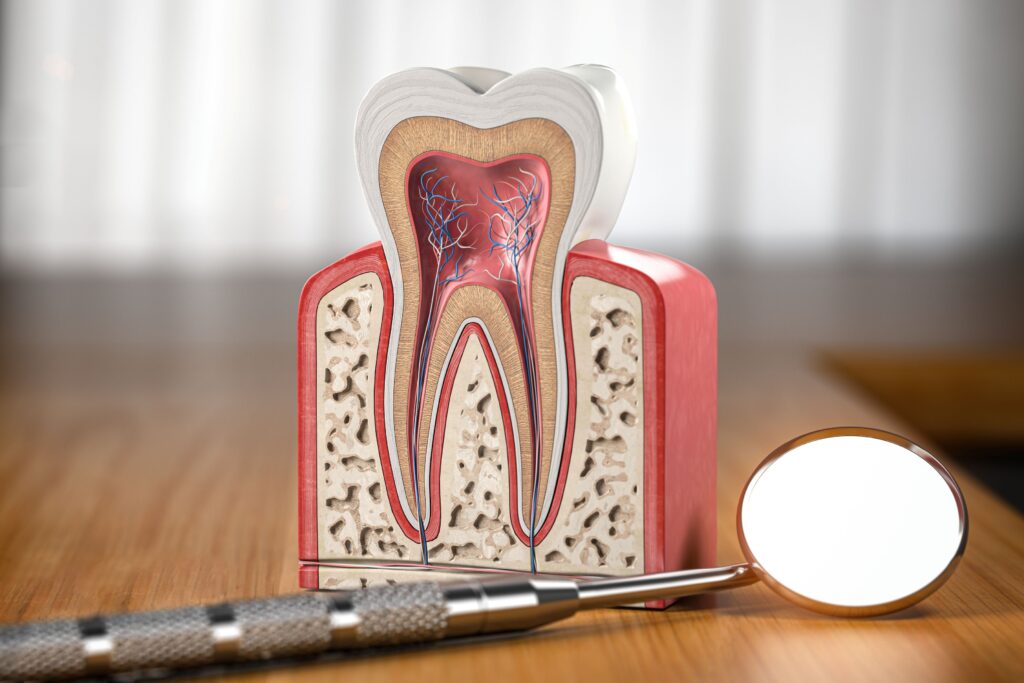
There are two main sections of teeth: the crown and the root. The former is the tooth-shaped portion that you see above the gumline, and is essential to your ability to bite, chew, and enunciate different sounds. The latter typically remains covered by your connective tissues and helps keep your teeth anchored firmly in your jawbone.
How Many Layers Do Teeth Have?
If you tend to think of your teeth as smooth, hard mounds of calcium from top to bottom, you might be surprised to learn that they actually contain four distinct layers, outlined in more detail below:
- Enamel. This protective outer layer is the hardest substance produced by the human body. It’s strong enough to resist chips and cracks, and keeps cavity-inducing bacteria at bay. It can be worn down over time but doesn’t regrow, meaning that preventive care is essential to avoiding decay and other concerns.
- Dentin. This exists just below the enamel and contains microscopic tubules that transmit different sensations, such as hot, cold, hard, sharp, and sticky, to stimulate the nerves inside your teeth.
- Cementum. This is a hard connective tissue that covers most of the root to protect the nerves inside and attaches to the periodontal ligament to help maintain your tooth’s position in your jaw.
- Pulp. This internal chamber contains soft materials, such as blood vessels, nerves, and other connective tissues, that must be protected to avoid potential damage, decay, and disease.
How Can I Protect My Teeth?
Thankfully, many common oral concerns can be prevented by following these helpful tips:
- Implement a routine. Brushing and flossing twice daily is a simple and effective way to steer clear of common dental problems.
- Choose foods wisely. Minimizing your consumption of overly sugary, crunchy, and acidic foods can preserve your enamel, which helps keep the underlying layers in good condition.
Finally, having a standard checkup and cleaning with your provider every six months allows them to catch and treat areas of concern before they worsen to help maintain your smile!
About the Practice
At Beck Dental Care of Columbia, people of all ages benefit from a team of providers who are passionate about helping families build the happiest, healthiest versions of their smiles. They collaborate to offer a complete menu of services, including routine checkups and cleanings, to meet your unique needs conveniently under one roof. Then, they take the time to learn your individual concerns and goals, and utilize state-of-the-art technology to devise personalized treatment plans to address them. You can request an appointment on the website or call (931) 416-3698.